Communal Area Cleaning in E14
Keeping shared spaces clean, safe, and welcoming across E14

Communal area cleaning in E14 is about more than appearance. In apartment blocks, converted buildings, mixed-use developments, and housing estates, shared spaces shape how residents, visitors, and staff experience the whole property. A tidy lobby, clean lift, fresh stairwell, and well-kept entrance immediately make a building feel more cared for. On the other hand, dust on skirting boards, litter in corners, or marks on doors can quickly create the impression that a site is neglected.
For local customers in E14, regular cleaning of communal areas is especially important because many buildings are busy, high-traffic, and used by different people throughout the day. Canary Wharf, Poplar, Blackwall, Limehouse, Millwall, and the surrounding parts of East London all have a mix of residential towers, modern developments, older estates, and commercial premises. That variety means shared areas need a cleaning approach that fits the building, the residents, and the level of daily footfall.
If you manage a block, oversee a residents’ association, look after a portfolio of properties, or simply want your building to feel presentable and hygienic, this service can make a noticeable difference. Reliable communal cleaning helps protect the value of a property, supports a better living environment, and reduces day-to-day complaints about mess and maintenance.
Why communal area cleaning matters in E14

E14 includes some of London’s busiest residential environments, where hundreds of people may share lifts, hallways, bins stores, staircases, and entrance lobbies. These areas are used constantly, which means dirt builds up fast. Foot traffic brings in grime, rainwater leaves marks, parcel deliveries create clutter, and bin movements can spread odours or spillages if spaces are not cleaned properly.
In tall apartment buildings and estates around Docklands, shared areas also face practical challenges such as lift buttons, glass panels, mail areas, and door handles getting touched all day. High-contact communal surfaces need consistent attention so they remain presentable and feel hygienic for residents and guests alike. When cleaning is delayed, even a small issue can become noticeable very quickly.
There is also a reputational side to it. For landlords, managing agents, and freeholders, the condition of communal spaces affects satisfaction and can influence how well a building is maintained overall. For residents, it affects comfort and pride in where they live. For businesses in mixed-use developments, clean shared entrances and corridors contribute to a more professional impression. That is why communal area cleaning in E14 is a practical investment rather than a cosmetic extra.
Types of properties we regularly see in E14
Because E14 covers a wide range of developments, a local cleaning service has to be flexible. A one-size-fits-all approach rarely works well. A modern tower block in Canary Wharf may need a different schedule and equipment mix compared with a low-rise estate in Poplar or a converted property near Limehouse.
Common property types that benefit from shared-area cleaning include:
- Apartment blocks and high-rise residential buildings
- Housing estates and estate-managed communal spaces
- Private developments with shared entrances and corridors
- Mixed-use buildings with residential and commercial access areas
- Converted houses with shared stairwells and hallways
- Blocks with lifts, bin stores, cycle stores, and mail areas
Each of these buildings has different expectations. Some need early morning cleaning before residents leave for work, while others require daytime visits when foot traffic is lower. Some sites have concierge teams and access control; others need careful key management and simple, dependable routines. A local team familiar with E14 can adapt to those realities without making the process difficult for residents or building managers.
What is included in communal area cleaning?
A good communal cleaning service should focus on the areas people see and use most often, while also paying attention to the details that keep the building functioning properly. The exact scope may vary from site to site, but many E14 customers ask for a mix of regular maintenance cleaning and periodic deeper attention.
Typical tasks can include:
- Cleaning entrance lobbies, reception areas, and shared hallways
- Vacuuming and sweeping staircases, landings, and corridors
- Mopping hard floors and wiping down edges and skirting areas
- Cleaning lift interiors, doors, call buttons, and panels
- Dusting ledges, handrails, bannisters, and communal fixtures
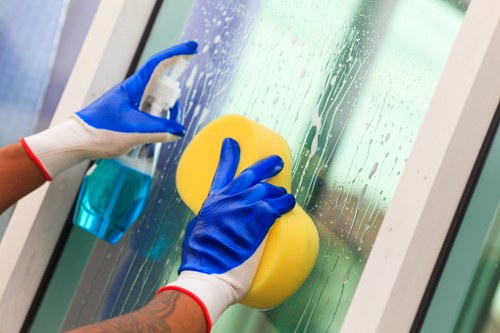
- Cleaning glass panels, mirrors, and internal entrance doors
- Removing litter from shared areas and entrance points
- Keeping bin stores and refuse areas tidy where agreed
- Wiping marks from walls, push plates, and low-level contact surfaces
- Refreshing areas that collect dirt from regular foot traffic
Some sites also need add-on services such as periodic deep cleaning, post-works cleaning, internal window cleaning, or extra attention after heavy use. The best results usually come from building a practical schedule that reflects how often the property is used and how much upkeep it needs.
Why a local E14 team is useful
There are plenty of reasons customers prefer a local service for communal area cleaning in E14. Familiarity with the area can help with access planning, parking, timing, and understanding the pace of local buildings. In parts of Docklands and Canary Wharf, for example, parking and loading can be challenging, and access rules may change from one site to the next. A local team is more likely to understand those conditions and plan around them.
Local knowledge also matters when buildings sit near busy roads, transport links, or commercial zones. Dust, general street debris, and weather exposure can increase the cleaning demand for entrance areas and lower-level glazing. In addition, some shared spaces experience heavy parcel delivery traffic, cyclists, and residents coming and going at all hours. A nearby cleaning team can respond more efficiently when extra attention is needed.
Choosing a local provider can make communication easier as well. Building managers often want a service that is straightforward, dependable, and responsive when something changes. That might mean adjusting a visit after maintenance work, increasing the frequency during a particularly busy period, or addressing recurring issues in a specific stairwell or lobby. Responsiveness is one of the biggest benefits of using a team that already works across E14.
How the service usually works

When customers enquire about communal area cleaning in E14, they are usually looking for a clear, low-hassle arrangement. The process should be simple from the start and designed around the property rather than forcing the property to fit an inflexible schedule.
A typical service process may look like this:
- Initial discussion: You explain the building type, the areas that need cleaning, how often they are used, and any access considerations.
- Site assessment or detailed review: The service provider looks at the communal areas, notes problem points, and identifies what level of cleaning is suitable.
- Cleaning plan: A schedule is agreed for regular visits, along with the specific tasks to be completed.
- Set-up and access arrangement: Keys, fobs, codes, concierge coordination, or other access details are organised securely.
- Regular cleaning visits: The communal areas are cleaned according to the agreed plan.
- Ongoing review: If the building changes, the schedule or cleaning scope can be adjusted.
This approach helps keep things practical for residents and efficient for property managers. It also supports consistency, which is often the most important factor in shared spaces. Regular, steady cleaning is usually more effective than waiting until a building looks visibly untidy.
What local customers often ask for
Communal cleaning needs vary, but there are a number of common priorities in E14. Some buildings need strong focus on entrance presentation because they receive many visitors. Others need help with hygiene and odour control around bin areas. Some properties just want to maintain a basic standard that residents can rely on each week.
Frequently requested priorities include:
- Keeping entrances smart and presentable
- Reducing dust in corridors and stairwells
- Improving lift cleanliness in high-traffic blocks
- Maintaining bin stores and waste areas
- Removing marks, smudges, and general wear from shared surfaces
- Supporting a regular cleaning routine that residents can trust
It is also common for managing agents to want flexible support during seasonal changes. Wet weather, increased mud, holiday periods, and higher delivery volumes can all make a building look messier than usual. A dependable cleaning plan can help maintain standards even when conditions change.
Benefits for residents, landlords, and managers
Shared spaces are used by many people, so the benefits of cleaning go beyond simple appearance. Clean communal areas contribute to comfort, safety, and the overall experience of living in or visiting a building. In a busy area like E14, where properties may have a constant flow of people and deliveries, those benefits become even more noticeable.
For residents, the main benefits are comfort and peace of mind. A clean staircase, pleasant-smelling entrance, and well-kept lift create a better daily experience. Residents are also more likely to feel that the property is cared for, which can improve satisfaction and reduce frustration about avoidable mess.
For landlords and managing agents, regular cleaning supports property presentation and can reduce issues escalating into larger complaints. Clean and tidy communal spaces also make it easier to spot maintenance problems early, such as leaks, broken fixtures, damaged doors, or signs of vandalism. In that sense, cleaning becomes part of wider building care rather than a separate task.
For commercial occupiers or mixed-use sites, the benefit is professional image. Shared entrances and corridors form part of a visitor’s first impression. If the building is well maintained, it reflects positively on everyone using it. That is why many local customers treat communal area cleaning in E14 as a regular operational need rather than an occasional tidy-up.
Areas covered across E14

E14 is a broad area, and local cleaning services commonly support properties across a number of nearby neighbourhoods and developments. This includes busy residential and business districts as well as quieter side streets and estate locations. Coverage often extends across:
- Canary Wharf
- Poplar
- Blackwall
- Leamouth
- Millwall
- Limehouse
- Isle of Dogs
- South Quay and nearby dockside developments
That range matters because different parts of E14 come with different building styles and access arrangements. A service that already works locally is more likely to understand the practicalities of shared entry systems, concierge-managed buildings, basement access, loading restrictions, and busy drop-off zones. Local familiarity can save time and reduce disruption.
If your building sits near transport hubs, waterfront areas, or high-density residential developments, a cleaning schedule can be designed to minimise inconvenience while keeping standards high. Book your service now if you want a routine that fits your property’s layout and daily use.
Pricing factors for communal area cleaning
Most customers want to know what affects the cost of communal area cleaning before they request a quote. It is sensible to ask, because pricing usually depends on several building-specific factors rather than a single fixed template. While exact costs are not something to guess at, understanding the main pricing drivers helps you compare services properly.
Common pricing factors include:
- Size of the property and number of communal floors
- Number of entrances, stairwells, and lift cores
- Cleaning frequency required
- Level of foot traffic and general wear
- Whether bin areas, cycle stores, or additional shared rooms are included
- How much attention is needed for glass, lifts, and high-contact surfaces
- Access arrangements and any on-site restrictions
- Whether periodic deep cleaning or extra tasks are added
Buildings that are regularly maintained often need less time per visit than properties that have been neglected. Likewise, a simple weekly clean may suit one block, while another may need several visits in busy periods. A clear quote should reflect the actual work involved and the condition of the site, so customers can choose a schedule that makes sense for their building.
How to prepare for a communal cleaning service
If you are arranging communal area cleaning in E14 for the first time, a little preparation can make the start smoother. The aim is not to create extra work for you, but to ensure the cleaning team can begin efficiently and avoid delays caused by missing access details or unclear expectations.
A useful preparation checklist includes:
- Identify the areas to be cleaned, including entrances, hallways, stairwells, lifts, and bin rooms.
- List any problem spots, such as recurring litter, muddy corners, or marks on walls.
- Confirm how access will be provided and who manages it.
- Explain any site rules, concierge procedures, or restrictions on cleaning times.
- Decide how often the service should run and whether this may change seasonally.
- Share any health, safety, or fire-route considerations that affect the work.
- Let the team know whether residents need to be informed before cleaning visits.
For busy developments, it is also helpful to plan around peak times. Morning rush hours, school runs, deliveries, and evening returns can all make it harder to clean efficiently. A practical schedule can reduce disruption while still keeping standards high. Good communication at the start usually leads to better long-term results.
What makes a service reliable?
Reliability matters more than almost anything else in shared-area cleaning. A building can only stay clean if visits happen on time, tasks are completed properly, and the service remains consistent over the weeks and months. In E14, where many properties have busy footfall and diverse user needs, reliability is especially important.
Look for signs that the service can deliver steady results:
- Clear cleaning schedules
- Flexible support for different property types
- Attention to high-touch surfaces and visible detail
- Awareness of access and security needs
- Ability to adapt if the building changes
- Simple communication for managers and residents
Consistency, discretion, and attention to detail are the qualities that usually matter most. If a team can work efficiently without disrupting residents and can keep up the same standard over time, the building benefits in a very visible way.
Residential and commercial cleaning needs in E14
Many people think of communal cleaning as just a residential service, but in E14 it is often relevant to commercial customers too. Mixed-use developments are common, and those properties require a sensible approach to shared access points, entrance presentation, and common circulation spaces. Office occupiers, landlords, property managers, and building operators may all need support with regular shared-area upkeep.
For residential sites, the focus is usually on hygiene, order, and comfort. For commercial or mixed-use buildings, there may be extra attention on presentation, customer impression, and keeping access routes clear. In both cases, the objectives are similar: make the shared areas cleaner, safer, and easier to use.
That overlap is one reason local expertise helps. A cleaning service that understands both residential and commercial expectations can handle varied site requirements without overcomplicating the process. Whether the property is a tower block, an estate, or a mixed-use development, the shared areas should feel well maintained.
Frequently asked questions
How often should communal areas be cleaned?
The right frequency depends on the building size, foot traffic, and the type of spaces involved. Busy apartment blocks often need more frequent visits than smaller developments. A local assessment can help set a realistic schedule.
Can the service include lifts and bin areas?
Yes, many customers ask for lifts, lobbies, bin stores, and other shared spaces to be included. These areas often need regular attention because they collect dirt quickly and are used by many people every day.
Will cleaning disrupt residents?
The service should be planned to minimise disruption. This often means choosing suitable times, working efficiently, and respecting access rules. A well-organised team will keep noise and inconvenience to a minimum where possible.
What if the building has difficult access or parking restrictions?
That is common in E14, especially near busy developments and transport links. A local cleaning team can usually plan around access requirements, loading issues, and parking limitations more easily than someone unfamiliar with the area.
Can cleaning be adjusted if the site gets busier?
Yes. Many properties need more support during certain periods, such as wet weather, maintenance work, or times of increased occupancy. It is usually possible to review the schedule and adjust the level of cleaning.
Do I need to prepare the communal space before a visit?
Usually only basic preparation is needed. It helps if access is arranged, any special instructions are shared, and residents are informed if required. The cleaning team should handle the actual work from there.
Why choose a dedicated communal cleaning service?
Some properties try to manage communal areas informally, but that often leads to inconsistency. A dedicated service brings structure, accountability, and the right cleaning routine for shared environments. In busy parts of E14, that structure is especially useful because the building may be exposed to high foot traffic, weather, and frequent use.
A dedicated cleaning service can help with more than day-to-day tidiness. It can support resident satisfaction, improve the overall look of the property, and reduce the chances of small issues becoming bigger problems. It can also help managers feel more confident that the building is being looked after properly between maintenance visits or contractor works.
If you want cleaner entrances, tidier corridors, and shared spaces that feel looked after, now is a good time to request a free quote. A tailored arrangement can be set up around your building, rather than relying on a generic schedule that does not quite fit.
Requesting a quote for communal area cleaning in E14
When you are ready to compare options, the most useful next step is a no-obligation quote based on the actual building. That allows the service to reflect the number of floors, entrances, lifts, and other spaces involved. It also helps identify the best cleaning frequency without overselling or underservicing the property.
To get started, it helps to provide details such as the property type, approximate size, access arrangements, and the key areas you want included. If there are known issues such as recurring litter, muddy entrances, bin store odours, or marks on internal glass, mention those too. The more accurate the information, the better the proposed cleaning plan can be.
Contact us today to discuss communal area cleaning in E14 and find a schedule that suits your property. Whether you manage a single block or several sites, a practical cleaning arrangement can make day-to-day life easier for everyone who uses the building.
Clean shared areas create a better atmosphere, support good property care, and help buildings in E14 stay presentable throughout the week. If that is what your property needs, book your service now and take the first step toward a cleaner, more welcoming communal environment.